Gravity Score Explained: How We Rank Competitor Momentum
One of the questions we get most from ProfitSpyTools users: "how do you actually decide which competitors are worth paying attention to?" The honest answer is we don't guess — we compute it, using a metric we call Gravity Score.
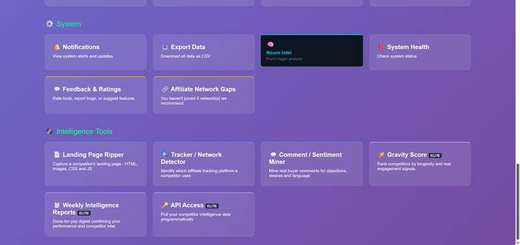
What it measures
Gravity Score is a 0-100 rating combining two real signals tracked over time for every competitor in the system:
- Longevity — how long we've observed a competitor actively operating and being tracked, capped at 90 days for full weight. A product that's been running consistently for months is a stronger signal than one that appeared last week and might disappear next week.
- Engagement — real activity signals gathered from the competitor's actual presence (comment activity, tracked interactions), not vanity metrics that are easy to fake.
Why longevity matters more than it seems
Affiliate and e-commerce offers churn constantly. A landing page that looks impressive today might be gone in three weeks — a common pattern with low-quality or non-compliant offers that get shut down by ad platforms or payment processors. Tracking longevity over a real window (not a single snapshot) filters out noise from offers that won't survive long enough to be worth studying.
Why it's not just a popularity score
It would be easy to build a "biggest competitor" score purely off traffic estimates or social follower counts — but those numbers are trivially gameable and don't tell you whether a competitor is actually converting or just spending on visibility. Gravity Score is deliberately built from signals that are harder to fake: sustained presence over time, plus real engagement activity we've directly observed, not self-reported numbers pulled from a platform's public profile.
How it's used across the platform
Gravity Score feeds into several other tools rather than sitting in isolation — it's a factor the Investment Decision Engine considers when evaluating whether a niche or product is worth pursuing, and it's the ranking signal behind competitor leaderboards in Weekly Intelligence Reports. The goal is the same throughout: separate competitors worth your attention from noise, using data that's actually been observed rather than assumed.
Want intelligence like this on your own niche?
See ProfitSpyTools Plans